
How to Build a Schoolwide Positive Reinforcement System in 5 Steps
Turn the expectations your school already uses into one consistent schoolwide economy – with a five-step rollout plan and worksheet to help you launch now and build as you go.
See it in action
Pleasant View Middle School wanted a more positive, consistent approach to student behavior.
By aligning recognition with its schoolwide expectations, giving students meaningful ways to earn and spend school currency, and regularly reviewing implementation, the school reported a 23% decrease in classroom disruptions within two quarters.
"ClassBank helped us shift from a myopic focus on the things kids were doing wrong to what kids are doing right."
Brett Harmon, Principal, Pleasant View Middle School
The school's experience shows that an effective reinforcement system does not have to be complicated – or completely built on day one.
See the Five Steps They Took
Choose your implementation team
Begin with a small team that can make decisions and keep implementation moving.
Your team might include:
- A principal or assistant principal
- A PBIS or MTSS leader
- Two or three teacher representatives
- A counselor or student-support specialist
- A student representative, when appropriate
Choose one person to serve as the implementation lead. This person does not need to manage every part of the system, but they should coordinate decisions, communicate with staff, and schedule implementation check-ins.
Before moving forward, answer:
- What team will be in charge of this?
- Who will be the implementation lead?
- What do we want to see improve – behavior, attendance, engagement, financial literacy, something else?
Keep the team small enough to act while gathering input from the wider school community.
Design your starter economy
Turn your school's existing values into a simple system for earning and spending.
You do not need to configure every possible feature before launching. Begin with the expectations, earning opportunities, and rewards that matter most to your school.
Choose what you want to reinforce
Start with three to five shared expectations students already know. Translate each expectation into specific behaviors staff can recognize.
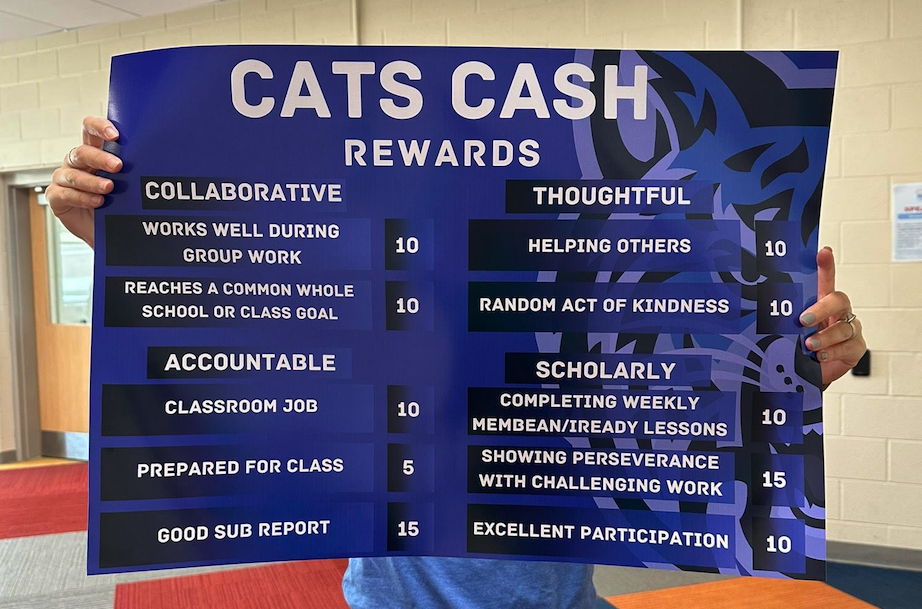
"Cats Cash" Bonus Opportunities at Pleasant View Middle School, Aligned with School Values
Pro tip: With ClassBank's automated attendance integration, students automatically earn a paycheck for coming to school – no added work for teachers needed.
Choose a few initial rewards
Students need meaningful reasons to participate, but a rewards system does not have to be expensive.
Start with a combination of:
- School privileges
- Special experiences
- Leadership opportunities
- Event tickets
- Free or donated items
- A small number of tangible rewards
Examples include lunch with a favorite staff member, choosing the music at lunch, positive calls home, homework passes, special seating, early access to school events, student-versus-staff activities, or school jobs.
Check out 100 free and low-cost reward ideas →
Before moving forward, answer:
- Which behaviors will we positively reinforce?
- What rewards will students be able to work towards earning?
Align your staff
A schoolwide system needs consistency, but consistency does not mean every teacher must run an identical classroom.
Agree on:
- Which expectations are shared across the school
- Which earning opportunities every teacher will use
- What teachers can customize
- How frequently staff should recognize students
- Who owns schoolwide responsibilities
- How teachers will receive support
During staff training, explain the "why" behind the system as clearly as the "how." Once students buy in, staff will too.
Before moving forward, answer:
- What will be consistent schoolwide, and what can teachers personalize?
- What is the simplest action we'll ask of staff?
Launch with students in phases
Introduce the expectations and earning system first. Add jobs, stores, and other elements once students are comfortable. Recognition during Week 1 is enough – jobs and the store can come later.
A suggested rollout timeline
School already started? Begin with Week 1 now. Your reinforcement system does not need to launch on the first day to shape the rest of the year.
Before moving forward, answer:
- What is our Week 1 launch date, and when will the store open?
- Are we adding student jobs or bills, and if so, when?
Review participation and adjust
Schedule the first implementation review before launching. Waiting until problems arise makes it easier for the system to lose momentum.
At the first review, ask:
- Are staff using the shared expectations consistently?
- Which students may be receiving little or no recognition?
- Which bonuses are staff using most often?
- Which rewards are motivating students?
- What feedback are teachers and students sharing?
- What should we simplify, add, or change?
The goal is not to use recognition data as a "gotcha" for teachers – it's to spot students who may be missing out on recognition and adjust the system as your school learns what works.
Before moving forward, answer:
- When is our first review date, and how often will we review after that?
- What will we look at – participation, bonus usage, reward popularity, staff and student feedback?
A schoolwide economy should evolve throughout the year, just like a real economy.
Summary: the five-step framework
- Choose your implementation team
- Design your starter economy
- Align your staff
- Launch with students in phases
- Review participation and adjust
Still have questions? See below, or talk through your school's rollout.
Why build a schoolwide positive reinforcement system?
A schoolwide positive reinforcement system – sometimes called a schoolwide recognition or rewards system – gives staff a shared way to recognize students for meeting common expectations.
When positive reinforcement is part of a broader PBIS framework, it can help schools:
- Create a more positive and predictable learning environment
- Reinforce expectations consistently across classrooms and common spaces
- Reduce office discipline referrals and exclusionary discipline
- Improve students' social, emotional, and behavioral outcomes
- Strengthen teacher efficacy, well-being, and school organizational health
- Use data to identify where students and staff may need additional support
A 2023 systematic review from the Center on PBIS found that PBIS is an evidence-based practice for reducing exclusionary discipline and improving social, emotional, and behavioral outcomes.
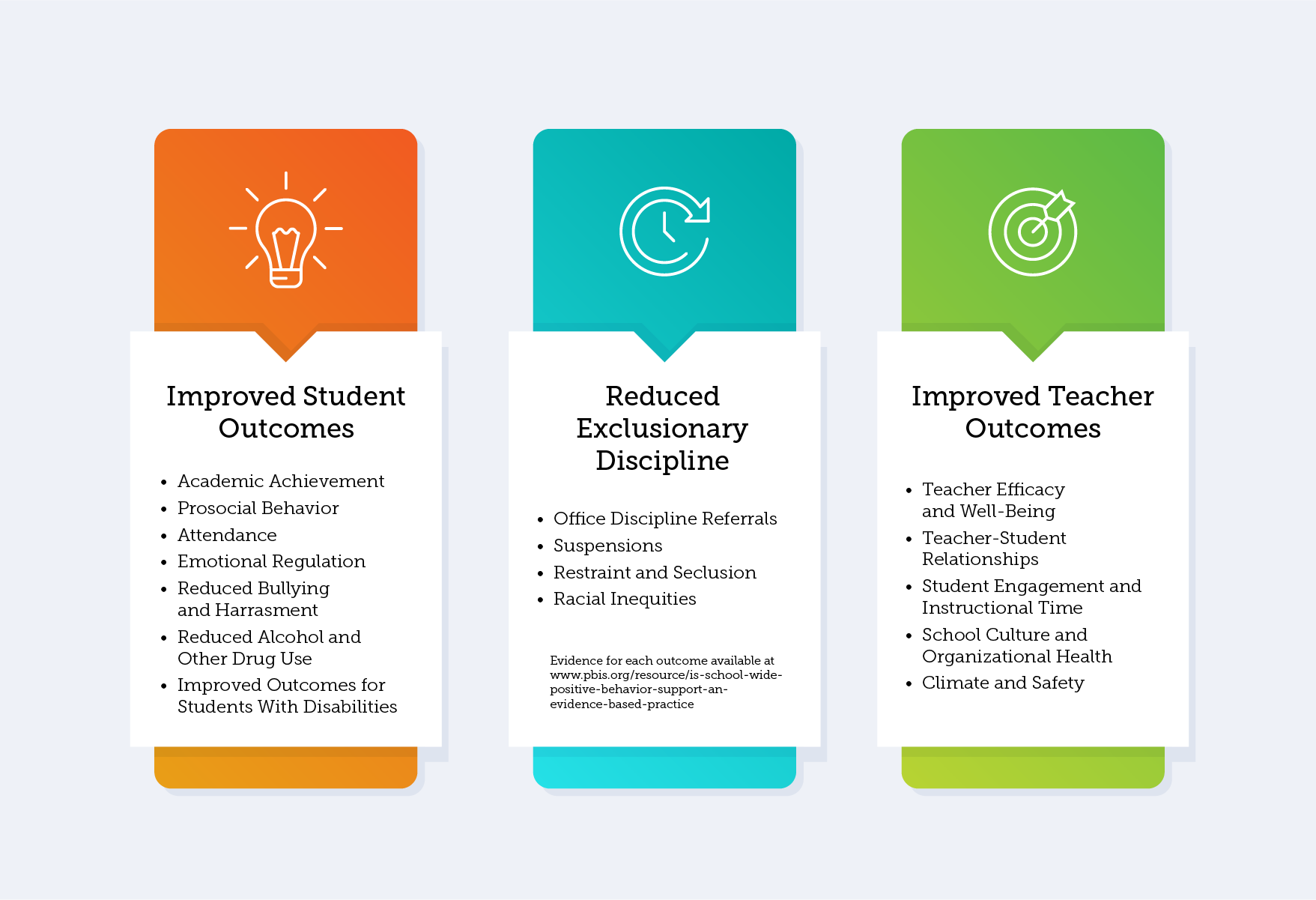
Source: Santiago-Rosario, M. R., McIntosh, K., Izzard, S., Cohen-Lissman, D., & Calhoun, T. E. (2023). Is Positive Behavioral Interventions and Supports (PBIS) an Evidence-Based Practice? Center on PBIS, University of Oregon.
Want to hear directly from Pleasant View?
In our webinar, PBIS leader Jack O'Brien shares strategies Pleasant View Middle School used to create a more consistent approach to positive reinforcement.
You'll hear how the school aligned staff, engaged students, reviewed implementation data, and reduced classroom disruptions by 23% within two quarters.
Read Pleasant View's Complete Story →
You do not have to build it alone
Every ClassBank school works with a dedicated School Success team that can help:
- Turn school expectations into bonuses and recommended settings
- Choose grade-appropriate prices and rewards
- Roster students and staff through your student information system
- Prepare teachers through professional development
- Plan a phased student launch
- Review implementation and make adjustments throughout the year
For teachers, getting started can be as simple as logging in, reviewing automatically rostered classes, and beginning to recognize students.
Stores, jobs, bills, savings, and other features can be introduced over time.
Your school decides your goals. ClassBank helps turn those priorities into an actionable system every staff and student can use.
Talk Through Your School's Rollout PlanFrequently asked questions
Does a schoolwide reinforcement system require a school store?
Do schools need to use physical prizes?
Does every teacher need to use every feature?
How long does it take to launch?
How do schools get staff buy-in?
ClassBank also provides professional development and ongoing support so teachers know exactly what to do without having to build or manage another system themselves. Schools can also use Automatic Attendance Payments to provide every student with consistent Tier 1 attendance recognition using the attendance teachers already take – with no additional teacher task.
A personalized 15-minute conversation. No commitment required.
.svg)